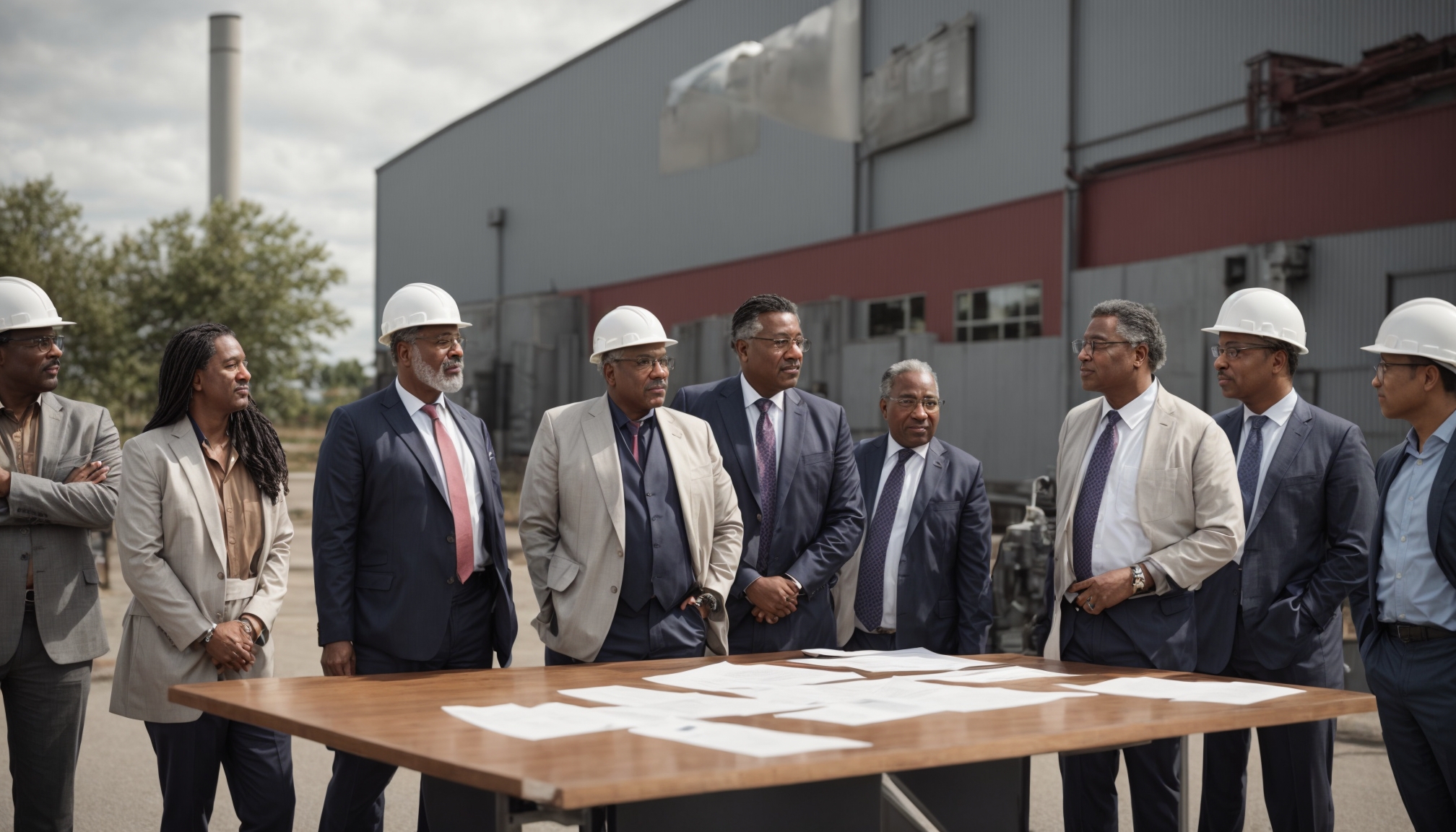
Resilience APAC: Asia-Pacific Hub for Reform – Local governments, business associations, and community groups are increasingly turning to inclusive industrial growth strategies to boost productivity while ensuring that workers, small firms, and vulnerable communities share the benefits.
Many regions face a dual challenge: weak job creation and rising inequality. Traditional industrial policies often favored large corporations and capital-intensive sectors, while leaving smaller enterprises and workers with limited skills behind. As a result, new factories did not always translate into broad-based prosperity.
Inclusive industrial growth approaches this challenge differently. Local leaders align industrial priorities with social goals such as quality jobs, skills upgrading, gender equality, and environmental resilience. They design policies so that new investment connects with local suppliers, vocational schools, and community needs, not only with global markets.
This shift is visible in cities that link manufacturing expansion with public transport, affordable housing, and access to childcare. By doing so, they reduce barriers for lower-income workers, especially women and young people, to access new economic opportunities.
Local governments sit at the center of inclusive industrial growth strategies because they control critical levers: zoning, infrastructure, permits, and local tax incentives. When they use these tools strategically, they can nudge investors toward more inclusive outcomes.
For example, some cities tie tax breaks to clear targets on local hiring, apprenticeship programs, or collaboration with technical colleges. Others integrate green standards into industrial zones, pushing firms to adopt energy-efficient technologies while training workers for new green jobs.
On the other hand, local authorities can also act as conveners. They bring together large manufacturers, small suppliers, unions, universities, and NGOs to coordinate investment plans and skills development. This reduces fragmentation and helps smaller firms access new value chains.
Without the right skills, communities cannot benefit from new factories or digital technologies. Therefore, training sits at the heart of inclusive industrial growth strategies. Local leaders increasingly co-design curricula with employers so that vocational schools teach practical skills aligned with real production needs.
Partnerships between industrial parks and community colleges can support workers who want to upgrade their skills while remaining employed. Flexible scheduling, modular courses, and recognition of prior learning all make it easier for adults to participate.
Read More: How industrial policy can create decent and inclusive jobs
Meanwhile, local leaders also pay attention to job quality, not just job quantity. They promote fair wages, safe workplaces, and social protection. Dialogue with unions and worker cooperatives ensures that productivity gains do not rely on unsafe conditions or informal, precarious contracts.
Small and medium enterprises (SMEs) often struggle to win contracts from big manufacturers. However, they are critical for spreading the benefits of industrialization across neighborhoods and rural areas. Inclusive industrial growth strategies therefore focus on integrating SMEs into local and regional supply chains.
Business development centers, often supported by city governments, help small firms meet quality standards, adopt better management practices, and access finance. Supplier development programs connect anchor firms with local entrepreneurs, creating stable demand for their products and services.
In addition, public procurement can act as a powerful lever. When municipalities reserve a portion of contracts for local SMEs, women-owned businesses, or social enterprises, they reinforce inclusive value chains while meeting their own infrastructure and service needs.
For industrial development to be truly inclusive, communities need a real voice in decision-making. Local leaders are beginning to experiment with participatory planning methods, public hearings, and citizen advisory boards focused on industrial and infrastructure projects.
Through these forums, residents can raise concerns about displacement, environmental impacts, or access to public services. This early engagement helps prevent social conflict, delays, and reputational risks for investors, while improving the design of projects.
Some cities also use digital platforms to gather feedback on industrial zone expansion, transport routes, or environmental standards. As a result, policies reflect a broader range of experiences, including those of informal workers, migrant communities, and youth.
To sustain political support, local leaders must show concrete results from their inclusive industrial growth strategies. This requires clear indicators, reliable data, and transparent communication. Common metrics include job creation, wage levels, training participation, SME contracts, and emissions intensity.
Benchmarking across regions allows mayors, economic development agencies, and chambers of commerce to compare their performance and learn from peers. International networks and development organizations often facilitate this exchange of experience.
Over time, evidence from successful initiatives helps refine policies. For instance, data may reveal that certain neighborhoods still face barriers, prompting targeted interventions in public transport, childcare, or digital access.
As global supply chains reorganize and green technologies spread, local leaders will play an even larger role in shaping economic transitions. Regions that combine climate action, innovation, and inclusive industrial growth strategies are more likely to remain competitive and socially stable.
Ultimately, prosperity depends on whether industrial change delivers better lives for the majority, not just higher profits for a few. When local authorities, businesses, and communities work together, they can turn new investment into shared opportunity, proving that inclusive industrial growth strategies are not only fair but also smart economics.
inclusive industrial growth strategies
Resilienceapac - In a joint study released this week, researchers documented that 73% of small‑business owners in Vietnam reported stable…
Resilienceapac - A joint study by the Asian Development Bank and the World Bank revealed that extreme heat events have…
Resilienceapac - A coalition of governments, NGOs, and private firms launched a continent‑wide eco‑sustainability initiative this week, aiming to raise…
Resilienceapac - The Asia-Pacific region absorbed over $1.3 trillion in economic losses from disasters between 2011 and 2022, yet governments…
Resilienceapac - Across the Asia-Pacific region, community-driven resilience programs have reduced disaster recovery time by 47% in pilot districts between…
Resilienceapac - A recent comprehensive analysis indicates that over 400 million people across the Asia Pacific region still lack access…
