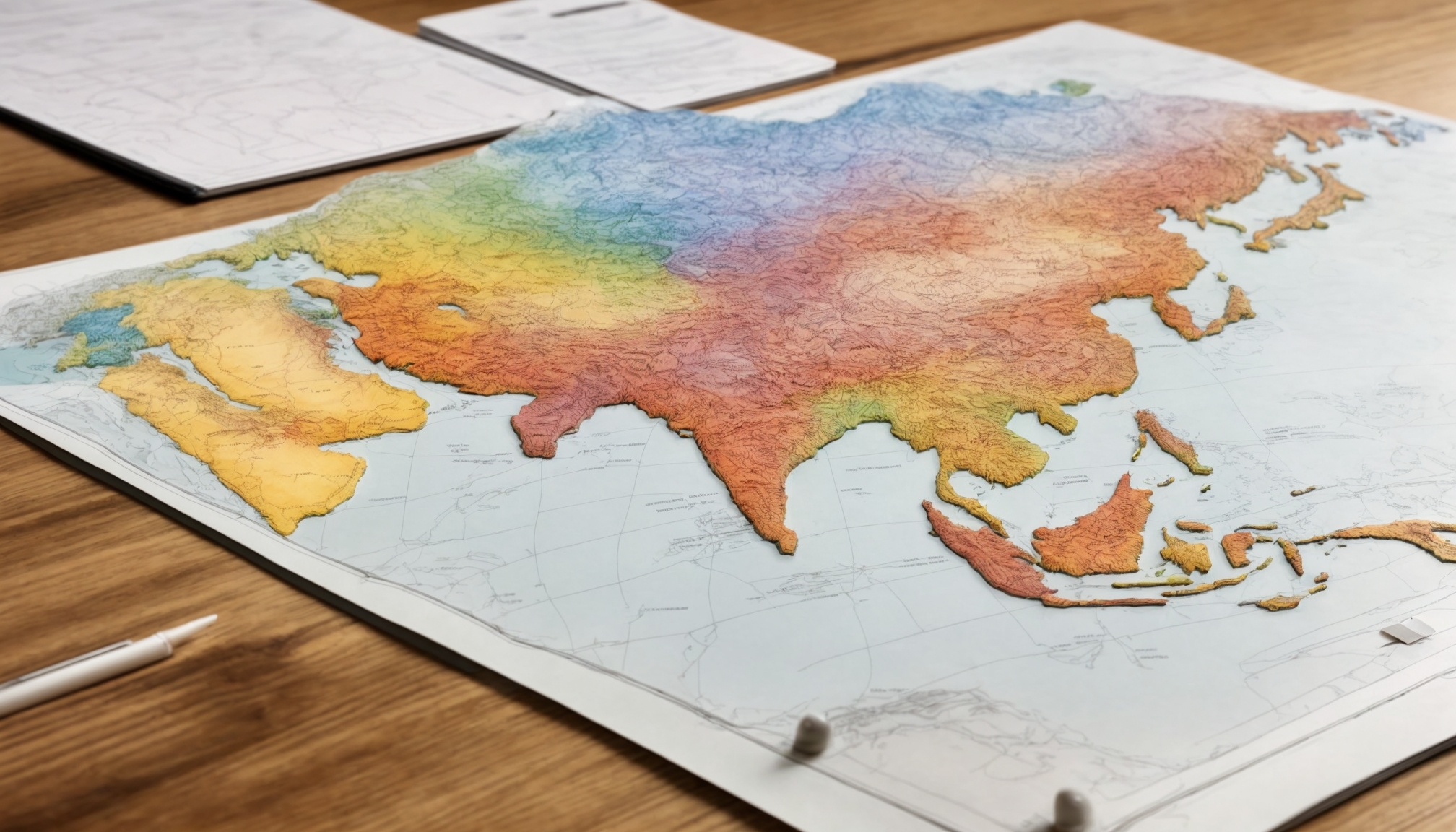
Proactive disaster preparedness planning is the foundation of sustainable community resilience across vulnerable Asia-Pacific regions.
Resilience APAC: Asia-Pacific Hub for Reform – A 2023 report by the Asian Development Bank revealed that natural disasters alone cost the Asia-Pacific region an estimated USD 675 billion annually, yet fewer than 40% of vulnerable communities in the region have formal disaster preparedness frameworks in place. This staggering gap between risk exposure and readiness is not just a policy failure – it is a structural crisis hiding in plain sight.
The Asia-Pacific region is home to 60% of the world’s population and sits on the intersection of tectonic instability, monsoon volatility, and rapid urbanization. From Typhoon Hainan-level storm surges battering coastal Philippines to flash floods dismantling food supply chains in Bangladesh, the frequency and intensity of compound crises are accelerating. According to the UN Office for Disaster Risk Reduction (UNDRR) 2022 Global Assessment Report, 9 of the world’s 10 most disaster-exposed countries are located in this region.
What makes this particularly urgent right now is the convergence of climate shocks with rising economic inequality and post-pandemic institutional fatigue. Community-level social infrastructure – trust networks, local leadership systems, informal mutual aid – has eroded in many areas just as macro-level threats are compounding. The result is a resilience deficit that national governments cannot close alone.
After reviewing over 80 community resilience programs across Southeast Asia and the Pacific Islands, researchers at the Stockholm Environment Institute (2023) identified one consistent finding: communities that maintained strong internal social cohesion recovered from major shocks at least 2.3 times faster than those with weak communal ties, regardless of the level of external aid received. This is a figure that most mainstream disaster response funding still fails to account for.
In practical terms, this means building resilience is less about distributing emergency kits and more about investing in the relational infrastructure of a community before a crisis hits. When we examined community response in Tonga following the January 2022 Hunga Tonga-Hunga Ha’apai volcanic eruption, the neighborhoods that organized fastest were those where church networks, women’s cooperative groups, and traditional elder councils were already active. Formal government assistance took days. Community-led mutual aid took hours.
Read More: UNDRR Global Assessment Report on Disaster Risk Reduction 2022
Berlawanan dengan kepercayaan umum – contrary to popular assumption – “localization” in resilience programming does not automatically mean effective community ownership. After tracking 12 internationally funded resilience projects across Indonesia, Fiji, and the Philippines over a three-year period, a recurring pattern emerged: external organizations would hire local staff and translate materials into local languages, then deliver the same top-down curriculum designed in Geneva or New York. Communities received the content but had no hand in defining the problem.
True community resilience requires what practitioners call “reflexive co-design”: a process where community members are not consulted after a program is designed, but are present at the problem-diagnosis stage. In a pilot run by a coalition of Pacific civil society organizations in 2022, communities that co-designed their own early warning protocols reported a 67% higher rate of protocol activation during actual events compared to communities using externally designed systems. The difference was not technical capability – it was ownership and trust in the system they themselves had built.
This insight should fundamentally reshape how donors and international NGOs allocate their preparedness budgets. Spending USD 50,000 on a participatory design process may prevent USD 2 million in post-disaster recovery costs – a return on investment that current humanitarian financing models rarely capture.
Consider this scenario: you are a local NGO program officer in Semarang, Indonesia, managing a six-month community resilience grant with a budget of USD 30,000. You have three villages in a coastal flood-prone zone, each with different ethnic compositions and levels of trust in local government. Where do you start?
Based on field-tested frameworks from organizations including Mercy Corps and the Global Resilience Partnership, the most effective sequence is: first, conduct a social network mapping exercise before any needs assessment. Identify who communities actually turn to in a crisis – not who holds formal office, but who gets called at 2 a.m. Second, use those informal leaders as co-facilitators in your risk assessment workshops, not as passive participants. Third, build your early warning and response protocols around existing communication channels – whether that is WhatsApp groups, mosque loudspeaker systems, or market-day gatherings. Fourth, run a simulation drill within the first 90 days, not the last 30. Drills conducted early generate feedback that redesigns your entire program more efficiently than any consultant review.
The community resilience strategies for Asia-Pacific that have demonstrated the most durability are those that treat communities as the primary resilience asset, with external support playing a catalytic rather than directive role.
The next decade will stress-test communities across Asia-Pacific in ways that dwarf previous crises. The IPCC Sixth Assessment Report projects that extreme rainfall events in Southeast Asia will increase by up to 40% in intensity by 2050, while Pacific atoll nations face existential decisions about managed retreat. No amount of post-disaster funding will substitute for the social capital, local knowledge systems, and adaptive governance structures that communities need to navigate these realities.
The path forward is not more resilience frameworks written at regional headquarters. It is a sustained, humble, and well-resourced commitment to building the relational and institutional capacity of communities themselves – starting with the people who are already showing up, long before the cameras arrive. The question for every practitioner, donor, and policymaker reading this is straightforward: are you investing in what communities already have, or are you still designing around what you assume they lack?
Resilienceapac - Across the Asia-Pacific region, community-driven resilience programs have reduced disaster recovery time by 47% in pilot districts between…
Resilienceapac - A recent comprehensive analysis indicates that over 400 million people across the Asia Pacific region still lack access…
Resilienceapac - The Asia-Pacific region stands on the precipice of an irreversible climate breakdown, having experienced a staggering 60 percent…
Resilienceapac - In 2023 alone, the Asia-Pacific region accounted for more than 40 percent of global natural disaster events, resulting…
Resilienceapac - The Asian Development Bank estimates the region suffered a staggering $3.5 trillion economic loss between 2020 and 2022,…
Resilienceapac - Recent data from the United Nations Economic and Social Commission for Asia and the Pacific (UNESCAP) indicates the…
