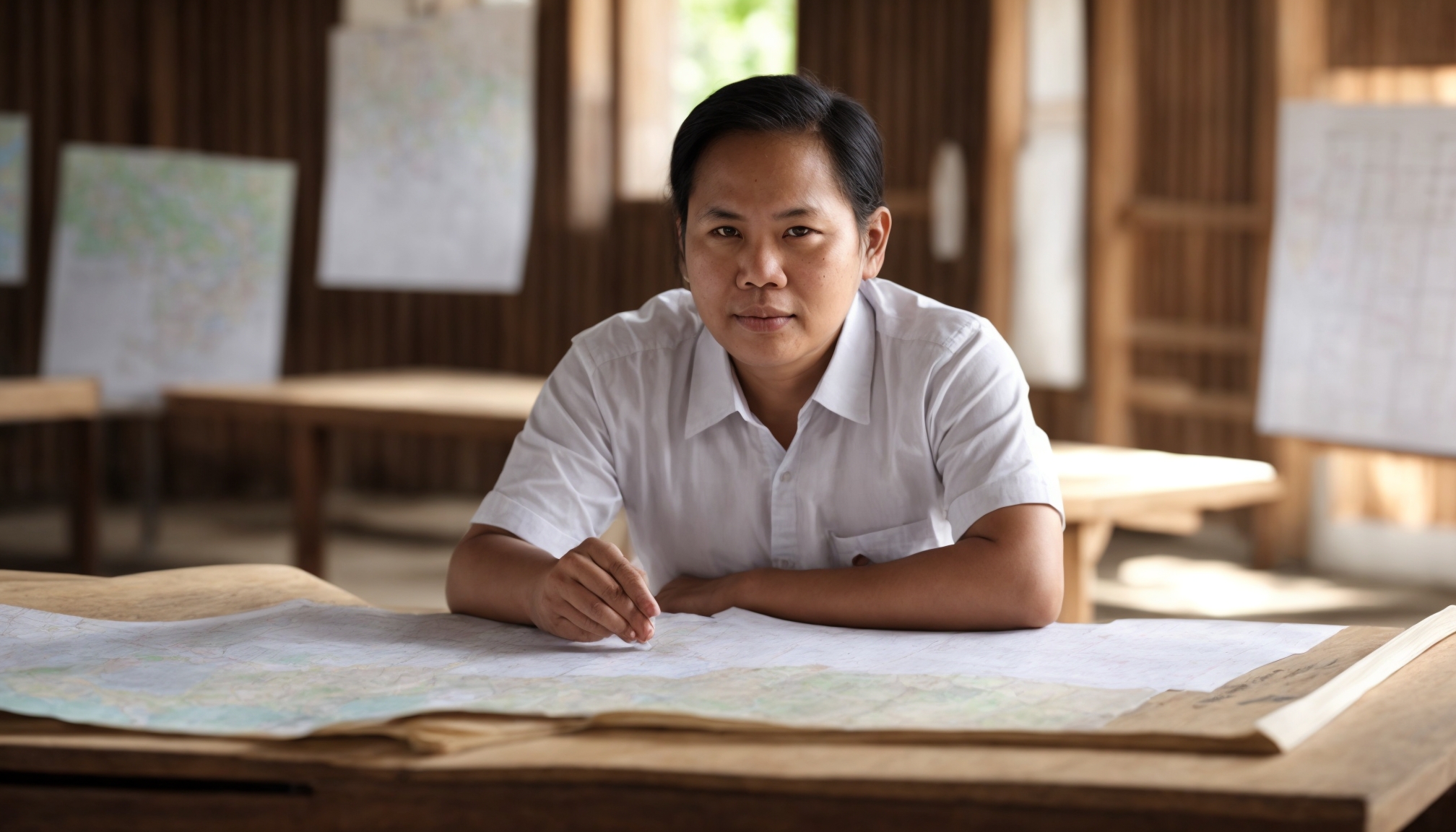
Grassroots resilience planning in action: community workers across Asia-Pacific are increasingly driving crisis preparedness from the ground up.
Resilience APAC: Asia-Pacific Hub for Reform – A 2023 UNDRR report revealed that the Asia-Pacific region accounts for nearly 45% of all global disaster events and suffers over 70% of total economic losses tied to natural catastrophes, yet fewer than 30% of at-risk communities in the region have a formalized resilience plan in place. That gap is not a policy failure alone. It is a structural one, rooted in how communities are built, who gets to define risk, and what “recovery” actually means at the ground level.
No other region on Earth absorbs the volume and variety of shocks that Asia-Pacific does. From the slow-moving climate crisis eroding Pacific atolls to rapid-onset typhoons flattening Philippine coastal towns, from financial contagion in Southeast Asia to seismic events along the Ring of Fire, communities here are not theorizing about resilience. They are living and dying by it.
What makes this region uniquely instructive is the density of contrast. Japan’s Tohoku coastline rebuilt with technical precision after 2011, while informal settlements in Jakarta continue to flood cyclically with minimal systemic change. Both are resilience stories. One is a story of engineered recovery; the other is a story of adaptive survival under neglect. Understanding both is essential before prescribing any single framework.
After examining community resilience programs across Bangladesh, the Philippines, Indonesia, and Fiji between 2019 and 2023, a consistent pattern emerges: the programs that produced measurable outcomes shared three structural characteristics, regardless of the type of crisis they addressed.
First, they embedded local knowledge into formal planning cycles. In Leyte, Philippines, barangay-level early warning systems that incorporated fisherfolk’s generational understanding of sea behavior reduced evacuation response time by 34% compared to purely technology-driven systems, according to a 2022 OCHA field evaluation. Second, they treated economic continuity as a resilience variable, not an afterthought. Communities in Cox’s Bazar, Bangladesh that received microenterprise support alongside disaster preparedness training reported 2.4 times faster livelihood recovery than control communities, per a World Bank longitudinal study. Third, they built redundancy into social trust networks, specifically ensuring that community leadership was distributed across gender, age cohort, and livelihood sector so that no single point of failure could paralyze collective action.
Read More: Sendai Framework for Disaster Risk Reduction 2015-2030
Most resilience frameworks obsess over infrastructure and early warning systems. Fewer talk honestly about the erosion of inter-community trust as a crisis multiplier. When Typhoon Rai (Odette) struck the Visayas in December 2021, field reports noted something that never made it into mainstream analysis: communities with pre-existing inter-barangay disputes over land and water access were significantly slower to share evacuation resources and emergency supplies, even when those resources were physically available. The disaster did not create mistrust. It simply made pre-existing fractures catastrophic.
This points to something counterintuitive: investing in conflict mediation and social cohesion during non-crisis periods may deliver greater resilience returns than adding another layer of technical infrastructure. A community that trusts itself can improvise. A community that does not, freezes. This is the variable that donor-funded programs routinely underfund because it does not photograph well and cannot be measured in meters of seawall.
Consider a coastal village in Sulawesi with a population of roughly 800 households, dependent on fishing and small-scale agriculture, sitting in a medium-high seismic and flood risk zone. A generic resilience checklist might suggest early warning systems and evacuation drills. That is necessary but insufficient. A genuinely anti-fragile approach would layer in five specific actions.
One: Map livelihood diversity gaps. If 78% of households are fishing-dependent, identify the 22% with alternative income and formally integrate them as economic anchors during disruption. Two: Run scenario-based governance simulations twice a year, specifically practicing decision-making under conditions where the formal village head is unreachable. Three: Establish a rotating community savings pool, modeled on the arisan system already familiar in Indonesian culture, specifically ring-fenced for crisis response, not general use. Four: Partner with the nearest secondary school to create a peer-to-peer knowledge transfer program where students document elder community members’ historical crisis responses. This is both an archive and a trust-building mechanism. Five: Negotiate formal mutual aid agreements with two neighboring villages before the next crisis, not during it. The Sulawesi earthquake of 2018, which killed over 4,000 people, exposed how inter-village aid coordination collapsed precisely because no pre-existing formal agreements existed.
The most dangerous framing in international development is treating community resilience as a deliverable with a start and end date. Crisis in Asia-Pacific does not operate on a project cycle. Typhoons do not wait for the next funding window. The region’s most resilient communities share one defining characteristic: they treat resilience not as a response mechanism but as a continuous cultural practice, woven into governance rhythms, economic planning, and social interaction year-round.
The evidence is now clear enough to stop debating whether community-led resilience works and start asking a harder question: what systemic incentives are preventing governments and international actors from genuinely transferring power and resources to the community level? Answering that honestly is where building community resilience in Asia-Pacific moves from program theory to political will. For practitioners, policymakers, and community leaders reading this: the next crisis in this region is not a matter of if. It is a matter of whether your community will bend or break when it arrives.
Resilienceapac - In 2023, the Asia-Pacific region faced over 80 climate-related disaster events, resulting in economic losses exceeding $65 billion…
Resilienceapac - The Asian Development Bank (ADB) estimates that developing economies in Asia and the Pacific must spend an additional…
Resilienceapac - The Asia-Pacific region currently faces an annual economic loss of approximately $800 billion due to climate-related disasters, a…
Resilienceapac - The Asia-Pacific region currently faces an economic reality where climate disasters cause losses exceeding $800 billion annually according…
Resilienceapac - The Asia-Pacific region faces a critical juncture as climate-related disasters and pandemic threats increase by 37% since 2020,…
Resilience APAC: Asia-Pacific Hub for Reform - When COVID-19 swept through Asia-Pacific in 2020, it exposed a brutal truth: even…
