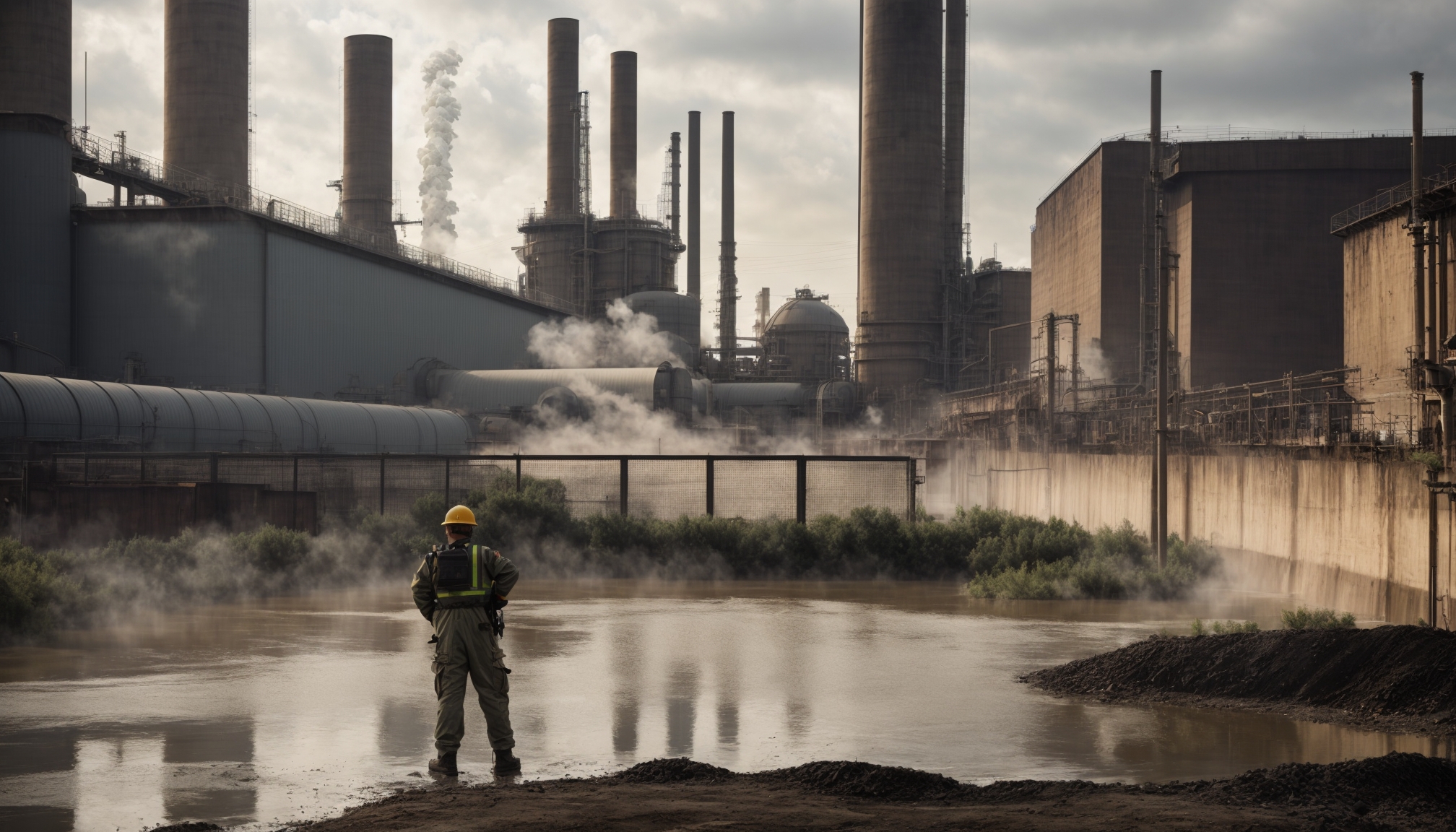
Resilience APAC: Asia-Pacific Hub for Reform – As climate risks intensify, climate resilience heavy industry strategies are rapidly shifting from optional ESG add-ons to core economic decisions that determine long-term competitiveness and asset value.
Heavy industry faces disproportionate exposure to physical climate risks such as heatwaves, floods, storms, and water scarcity. Steel mills, cement plants, chemical complexes, and mining operations often sit near coasts and rivers, rely on stable power and water supplies, and operate capital-intensive assets with lifetimes of several decades. Because of this, climate shocks can translate directly into production outages, safety incidents, and accelerated asset depreciation.
At the same time, transition risks from decarbonization policies and market shifts are reshaping cost structures. Carbon pricing, emissions standards, and demand for low-carbon materials are influencing which facilities remain profitable. Therefore, integrating climate resilience into existing risk management frameworks is no longer just environmental stewardship; it is a financial necessity for asset-heavy sectors.
Boards and investors now ask how resilient plants are to future climate scenarios, how quickly they can recover from disruptions, and how vulnerable supply chains remain. These questions feed directly into valuations, insurance conditions, and project financing decisions for large industrial projects.
From raw material extraction to final processing, each stage of the heavy industry value chain has distinct climate vulnerabilities. Mining operations can lose production days due to floods or extreme heat, while transport corridors may close when ports, rail, and roads suffer weather-related damage. Downstream, refineries and smelters depend on reliable cooling water, grid stability, and safe working conditions.
Quantifying these risks begins with location-specific climate data and scenario analysis. Companies combine hazard maps with asset inventories, production data, and historical loss records to estimate potential revenue at risk. Insurers and lenders increasingly request such assessments as part of due diligence, pushing companies to develop more granular understanding of physical exposure.
On the other hand, failing to understand these risks can lead to mispriced assets and stranded investments. A facility that looks efficient today might face chronic downtime or soaring operating costs in fifteen years under a high-warming scenario. Because heavy industry assets are long-lived, the timing mismatch between investment decisions and climate impacts creates a distinct financial challenge.
The core economic question is how much to invest in resilience measures compared with the expected cost of climate-related disruptions. Adaptation options range from hard infrastructure upgrades, such as flood defenses and improved cooling systems, to operational changes like flexible maintenance windows, diversified suppliers, and revised safety protocols for extreme heat.
Companies can model scenarios where they compare baseline losses from unmitigated climate impacts with the capital and operating costs of resilience measures. For example, a coastal steel plant might evaluate whether elevating critical equipment and building sea walls is more cost-effective over twenty years than accepting repeated storm-related shutdowns and repairs.
As a result, internal rate of return (IRR) and payback periods for resilience projects often depend on assumptions about future climate volatility and policy. When scenario analysis uses realistic climate data and forward-looking regulatory expectations, many adaptation investments show attractive financial returns, particularly for sites already exposed to frequent disruptions.
Embedding climate resilience heavy industry planning into corporate strategy helps align capital allocation, operations, and market positioning. Leading companies integrate climate scenarios into their enterprise risk management, capital budgeting, and site selection for new facilities. They also link resilience to decarbonization, recognizing that low-carbon technologies can sometimes improve robustness, for example by reducing dependence on vulnerable fuel supply chains.
Climate stress-testing of portfolios has emerged as a strategic tool. Management teams test how revenue, margins, and asset values might change under different warming and policy pathways. These exercises inform decisions about which plants to retrofit, which to relocate, and where to prioritize flexible capacity. They also influence product strategies, as customers in automotive, construction, and infrastructure increasingly demand both low-carbon and resilient materials.
Read More: how infrastructure sectors build climate resilience and manage risk
Moreover, integrating resilience into strategy strengthens relationships with regulators, communities, and workers. Industrial sites that demonstrate robust planning for floods, storms, and heatwaves are more likely to maintain operating licenses and social acceptance. Investors view this as a proxy for management quality, which can translate into lower capital costs and better access to sustainable finance instruments.
Funding resilience upgrades in heavy industry requires clear business cases and, in many regions, supportive policy frameworks. Public incentives, green bonds, and blended finance can accelerate investments where private returns alone may be uncertain. Governments that depend on industrial jobs and exports increasingly recognize that climate-resilient production is essential to long-term economic stability.
The economics also interact with carbon pricing and industrial decarbonization policies. Facilities that invest in efficiency, electrification, and low-carbon processes often gain resilience co-benefits, such as reduced exposure to fuel price volatility. Conversely, plants that delay both decarbonization and resilience may face compound risks: higher carbon costs, unreliable operations, and potential loss of market access.
Financial institutions are tightening expectations through disclosure standards and risk management rules. As climate risk reporting becomes mandatory in more jurisdictions, heavy industry firms must present credible resilience plans alongside emissions trajectories. This transparency helps capital markets differentiate between companies that are prepared and those that remain vulnerable.
Beyond balance sheets, climate resilience heavy industry planning directly affects operational continuity and worker safety. Extreme heat increases risks of accidents and health incidents, especially in high-temperature processes like smelting and refining. Companies must redesign shift schedules, cooling systems, and personal protective equipment to protect workers while maintaining productivity.
Supply chain management also plays a crucial role. Diversifying sources of critical inputs, building inventory buffers for key materials, and collaborating with logistics providers all strengthen resilience. Digital tools such as predictive maintenance and real-time weather monitoring enable faster responses to emerging threats, reducing unplanned downtime.
In addition, cross-functional collaboration within organizations becomes essential. Engineering, finance, sustainability, and operations teams must work together to evaluate risks, prioritize investments, and monitor outcomes. This integrated approach turns climate resilience into a continuous improvement process rather than a one-time compliance exercise.
Over the next decades, climate resilience heavy industry strategies will strongly influence which companies thrive in a warming world. Firms that proactively strengthen assets, supply chains, and workforces are more likely to attract investment, secure customer contracts, and maintain stable operations under volatile conditions.
Competitive advantage will not stem only from low production costs, but also from the reliability and sustainability of supply. Customers building critical infrastructure, transportation systems, and housing will favor partners that can deliver materials consistently despite climate shocks. Therefore, the economics of resilience intertwine with brand value and market positioning.
Ultimately, aligning capital planning, risk management, and policy engagement around climate resilience heavy industry can safeguard asset values while supporting a broader transition to a low-carbon economy. Companies that move early, measure outcomes transparently, and adapt strategies as climate science evolves will be best positioned to protect both financial performance and industrial capacity in the decades ahead.
Resilienceapac - The Asia-Pacific region stands on the precipice of an irreversible climate breakdown, having experienced a staggering 60 percent…
Resilienceapac - In 2023 alone, the Asia-Pacific region accounted for more than 40 percent of global natural disaster events, resulting…
Resilienceapac - The Asian Development Bank estimates the region suffered a staggering $3.5 trillion economic loss between 2020 and 2022,…
Resilienceapac - Recent data from the United Nations Economic and Social Commission for Asia and the Pacific (UNESCAP) indicates the…
Resilienceapac - The Asia-Pacific region defied global recession fears in 2023, posting a robust 4.6% growth rate while major Western…
Resilienceapac - The Asia-Pacific region loses approximately $800 billion annually due to climate-related disasters, a staggering figure that demands immediate…
