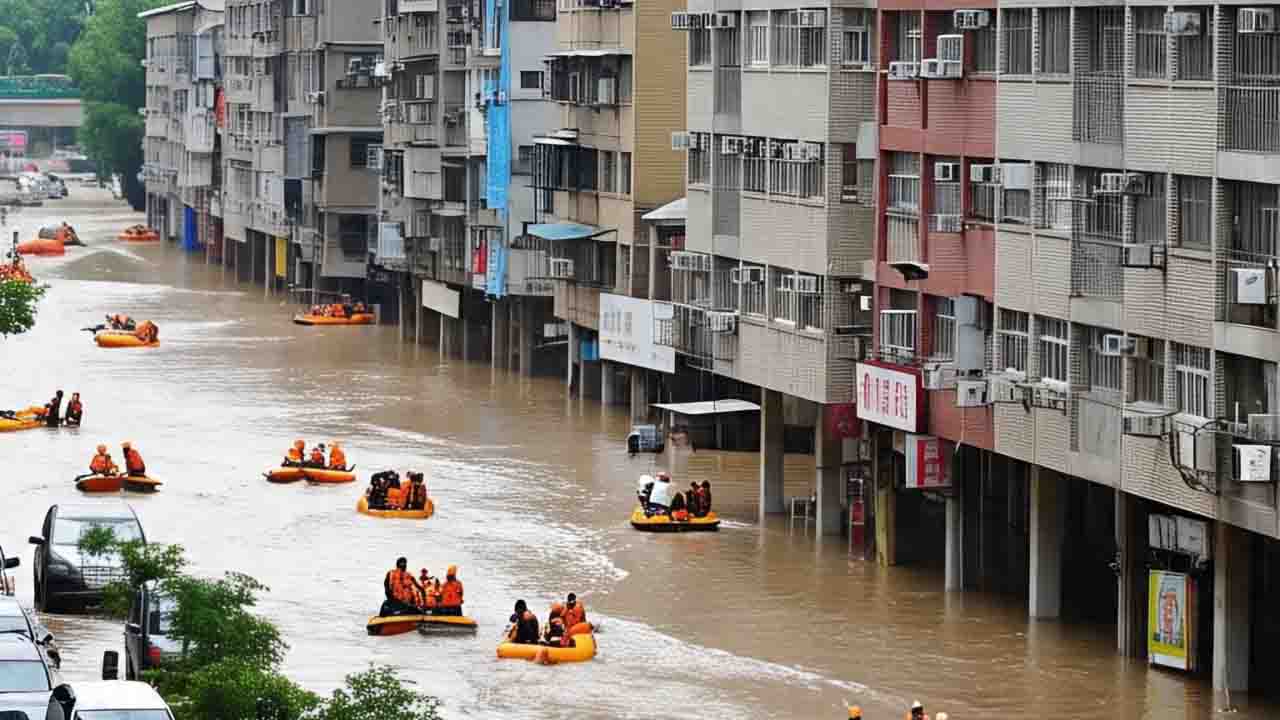
Resilienceapac – Red Alert warnings were sounded across large swathes of China this week as relentless floods battered northeastern and northwestern regions, revealing how vulnerable the country’s aging flood defense systems have become. Fueled by the seasonal “Plum Rains,” these floods have left a trail of destruction through provinces like Liaoning, Sichuan, and Gansu, raising grave concerns over the resilience of China’s critical infrastructure.
In Liaoning province, authorities declared a Red Alert after days of unrelenting rainfall breached poorly maintained levees. Floodwaters surged through entire neighborhoods, forcing the evacuation of thousands of residents, destroying roads, and cutting off power to vital services. Local rescue teams described harrowing scenes as families clung to rooftops, waiting for help. Decades-old flood barriers, never upgraded to handle the increasing extremes of modern rainfall, crumbled under the pressure, turning once-bustling towns into islands of mud and debris. Experts warn that failing to modernize these infrastructures will make future floods even more catastrophic.
“Laughing with Ghosts: Upstart Crow Turns Terror into Comedy”
Meanwhile, in the northwest, Sichuan and Gansu faced a similar nightmare. Furthermore, warnings of more rainfall accompanied the Red Alert status issued there, as saturated dams and aging embankments buckled, sending torrents through villages and farmlands. Experts already estimate agricultural losses in the millions, jeopardizing food security in areas still recovering from previous droughts. The combination of outdated flood defenses and rapid urban expansion has created a perfect storm. Making these regions dangerously vulnerable to the changing climate’s unpredictable patterns.
The repeated Red Alert warnings have sparked a nationwide conversation about the need for modern, climate-resilient infrastructure. Experts argue that traditional flood systems, built for rainfall patterns decades ago. Can no longer protect China’s growing urban centers and critical farmlands. As “Plum Rains” intensify and last longer each year, urbanization has worsened the problem by paving over natural drainage systems. Unless decisive action is taken to rebuild and strengthen flood protections. Millions remain at risk of losing their homes, livelihoods, and even their lives in future disasters.
“Green Revolution on the Road: Truck Decarbonization Accelerates”
Resilienceapac - A joint study by the Asian Development Bank and the World Bank revealed that extreme heat events have…
Resilienceapac - A coalition of governments, NGOs, and private firms launched a continent‑wide eco‑sustainability initiative this week, aiming to raise…
Resilienceapac - The Asia-Pacific region absorbed over $1.3 trillion in economic losses from disasters between 2011 and 2022, yet governments…
Resilienceapac - Across the Asia-Pacific region, community-driven resilience programs have reduced disaster recovery time by 47% in pilot districts between…
Resilienceapac - A recent comprehensive analysis indicates that over 400 million people across the Asia Pacific region still lack access…
Resilienceapac - The Asia-Pacific region stands on the precipice of an irreversible climate breakdown, having experienced a staggering 60 percent…
