Resilience APAC: Asia-Pacific Hub for Reform – Renewable energy resilience planning is moving from a sustainability goal to an operational requirement as extreme weather, grid congestion, and fuel volatility pressure buildings to stay online.
Resilience used to mean diesel backup and good maintenance. However, many operators now face longer outages, tighter air-quality rules, and higher fuel logistics risk. As a result, on-site renewables and energy storage are becoming core tools for keeping critical loads running.
When designed well, solar and wind reduce dependence on delivered fuel and can support operations during grid stress events. In addition, renewables can stabilize long-term energy costs, which helps facilities budget for reliability upgrades instead of reacting to emergencies.
The shift also reflects how grids are changing. More variable generation on the system can create price spikes and local constraints. Therefore, buildings that can self-supply, shift loads, and dispatch stored energy often perform better during peak events and recover faster after storms.
The starting point is defining what must stay powered and for how long. Hospitals, data rooms, refrigeration, elevators, security systems, and communications rarely share the same tolerance for downtime. Meanwhile, office plug loads and nonessential HVAC zones can often be curtailed without major harm.
A practical approach groups loads into tiers: life safety, mission critical, business continuity, and discretionary. After that, engineers size generation and storage to cover the top tiers first. This avoids overspending on capacity that rarely delivers real resilience value.
Equally important is electrical architecture. Critical loads may need dedicated panels, automatic transfer switching, and islanding capability so they can run even when the grid is down. On the other hand, adding renewables without considering protection, fault current, and grounding can create nuisance trips that reduce reliability.
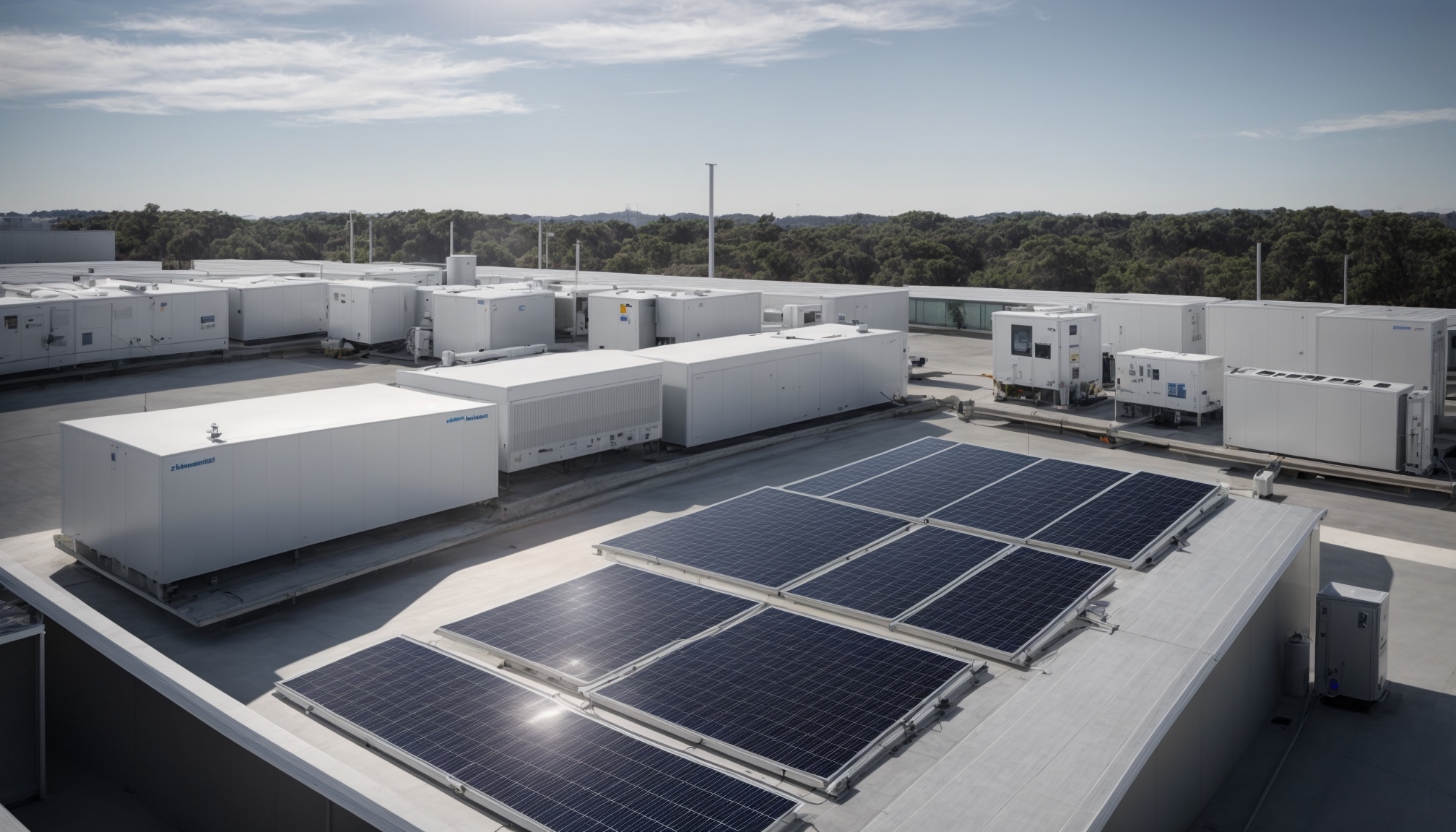
Solar photovoltaics are often the most straightforward building-scale renewable. Rooftops, canopies, and adjacent land can host arrays that supply daytime loads and charge batteries. However, solar alone does not guarantee outage coverage, especially in winter storms or smoky conditions, so pairing matters.
Wind can complement solar in regions with strong night or winter wind profiles. In addition, small and medium turbines can be useful at campuses or industrial sites with suitable setbacks and permitting conditions. Careful siting and noise planning remain essential for community acceptance.
Battery energy storage typically delivers the fastest resilience gains. Batteries can ride through momentary grid interruptions, provide peak shaving, and support black start sequences for other equipment. As a result, many facilities use storage as the control “hub” that ties renewables to critical loads.
Hybrid systems can still include generators, but the role changes. Instead of running full-load for hours, a generator may serve as a rare-event extender once renewables and batteries cover short outages. Therefore, fuel use, maintenance cycles, and emissions can drop while resilience improves.
Read More: Microgrid basics and planning guidance
Resilience is not just hardware; it is orchestration. A microgrid controller coordinates solar output, battery dispatch, and load shedding to keep voltage and frequency within limits during islanded operation. Meanwhile, building automation systems can pre-cool spaces, reduce noncritical loads, or shift processes when the grid signals stress.
Advanced metering and submetering improve decisions. If operators can see which end uses spike during certain conditions, they can prioritize efficiency upgrades that directly extend backup runtime. In addition, predictive analytics can forecast solar generation and expected load, improving dispatch plans before an outage occurs.
Cybersecurity also becomes part of reliability. Connected controllers and remote monitoring reduce response time, but they require hardened networks and access controls. Therefore, resilience programs should include segmented networks, patch management, and incident response playbooks.
Even the best system can underperform if day-to-day operations ignore resilience. Regular testing of islanding modes, black start procedures, and transfer sequences ensures equipment behaves as expected. After that, staff training turns written procedures into muscle memory.
Load flexibility is often the cheapest “capacity” available. Facilities can identify temporary setbacks in HVAC, lighting reductions, and process scheduling to keep critical circuits stable. As a result, batteries last longer and generators run fewer hours when the grid is unavailable.
Maintenance planning should match the new asset mix. Solar requires cleaning and periodic inspections, while batteries need thermal management checks and firmware updates. However, these tasks are predictable and often less disruptive than emergency fuel deliveries during severe weather.
Resilience investments compete with other capital priorities, so the business case must be clear. Operators typically combine avoided outage costs, demand charge reductions, and energy savings to justify projects. In addition, many jurisdictions offer tax credits, grants, or utility programs for solar and storage that improve payback.
Financing structures can reduce upfront cost. Power purchase agreements, energy-as-a-service models, and shared savings contracts help organizations start with limited capital. On the other hand, long-term contracts should be reviewed carefully for performance guarantees, maintenance responsibilities, and end-of-term options.
Procurement should also demand performance metrics that reflect resilience, not only annual kilowatt-hours. For example, bidders can be required to model islanded runtime for specific critical loads under conservative weather assumptions. Therefore, stakeholders can compare offers on reliability outcomes rather than marketing claims.
A strong rollout begins with an energy and resilience audit: define critical loads, map electrical single-line diagrams, and document outage history. After that, evaluate on-site renewable potential and any permitting constraints that could affect timelines.
Next, run scenarios that balance cost and capability. A phased approach often works best: implement efficiency and load controls first, add batteries for ride-through, then expand solar or wind to extend autonomy. Meanwhile, verify that interconnection requirements and protection settings support safe islanding.
Documentation should be operational, not theoretical. Site teams need quick-reference procedures, maintenance calendars, and contact lists for utilities and vendors. Because resilience depends on execution, clear roles during an outage can prevent small issues from becoming system-wide failures.
Ultimately, renewable energy resilience planning succeeds when design, controls, and operations align to keep essential services running under stress, and renewable energy resilience planning remains strongest when measured, tested, and improved after every real-world event.
For organizations pursuing long-term reliability, renewable energy resilience planning provides a repeatable framework for choosing the right mix of renewables, storage, and flexible loads, while renewable energy resilience planning also supports compliance and cost control without sacrificing uptime.
Decision-makers can start small, validate performance, and scale, but renewable energy resilience planning should always prioritize critical loads first, and renewable energy resilience planning must be treated as an ongoing operational discipline rather than a one-time installation.
With that mindset, renewable energy resilience planning becomes the bridge between sustainability targets and dependable power, and renewable energy resilience planning can deliver resilience gains even as grids and weather patterns continue to evolve.
Resilience APAC: Asia-Pacific Hub for Reform - Regional health systems crisis remains a persistent challenge, especially amid increasing public health…
Resilience APAC: Asia-Pacific Hub for Reform - Asia-Pacific resilience strategies are critical as climate change increasingly impacts the region’s communities…
Resilience APAC: Asia-Pacific Hub for Reform - Asia-Pacific countries are increasingly focusing on climate resilience Asia Pacific strategies to confront…
Resilience APAC: Asia-Pacific Hub for Reform - Local community resilience strategies have become essential in confronting the dual challenges of…
Resilience APAC: Asia-Pacific Hub for Reform - Asia Pacific data center boom is significantly testing the resilience of the region's…
Resilience APAC: Asia-Pacific Hub for Reform - Urban centers throughout Asia-Pacific face increasing threats from climate change, making the development…
