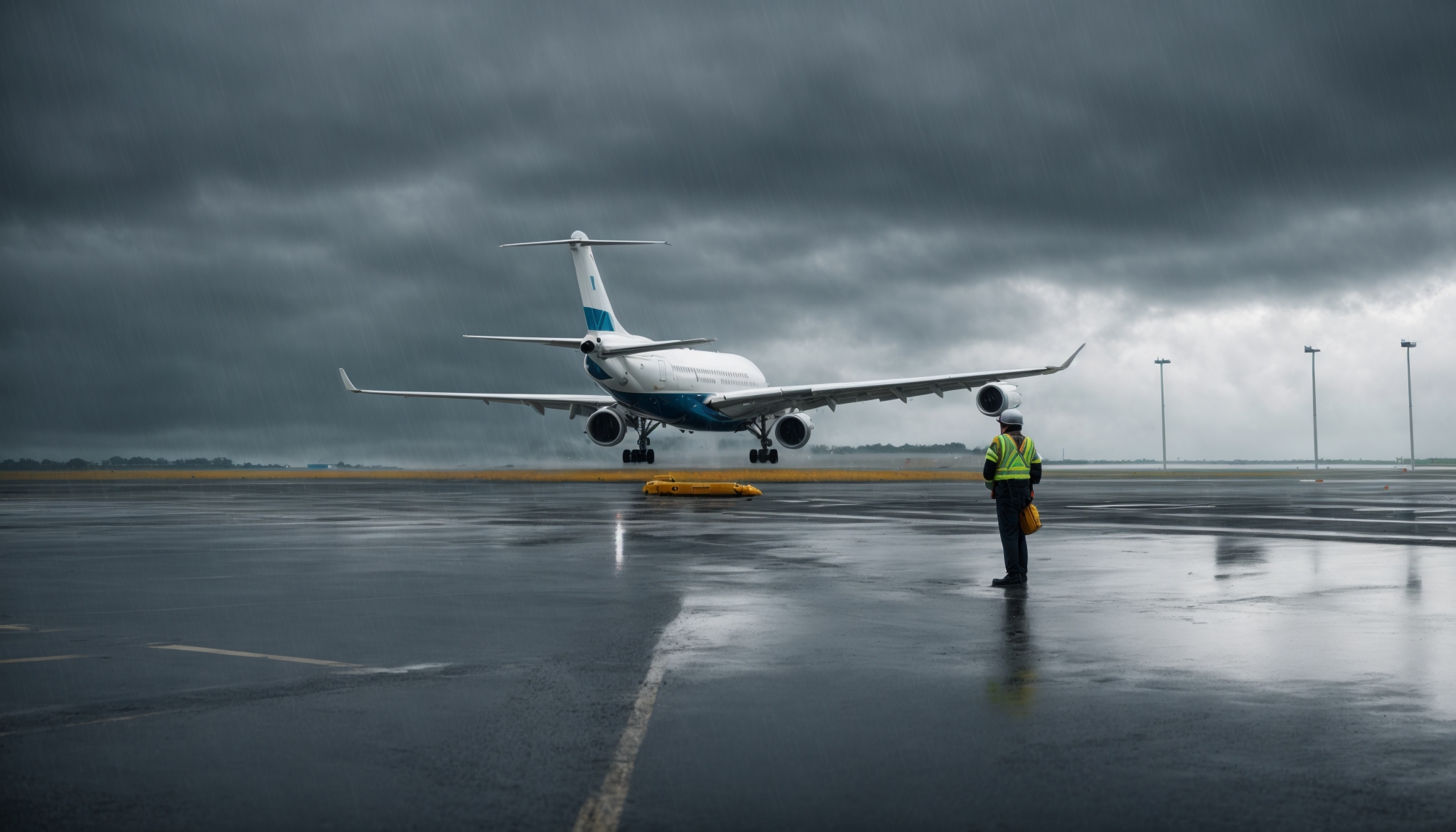
Resilience APAC: Asia-Pacific Hub for Reform – A new airport climate adaptation study highlights how rising temperatures, sea-level rise, and extreme weather threaten global aviation infrastructure and demand faster, smarter planning.
The latest airport climate adaptation study shows that many major hubs sit in low-lying coastal areas, floodplains, or regions facing extreme heat. Runways, terminals, and access roads already experience more frequent disruptions from storms, heavy rainfall, and heatwaves. As a result, delays, cancellations, and safety concerns are increasing, with direct financial losses for airlines, airport operators, and passengers.
Researchers mapped hundreds of airports against climate projections for the coming decades. They found that sea-level rise and storm surges threaten coastal runways, while intense rainfall can overwhelm outdated drainage systems. In addition, heatwaves reduce air density, forcing aircraft to take off with lower payloads or use longer runway distances, which can limit operational capacity at busy hubs.
The airport climate adaptation study also warns that climate-related disruptions can ripple through global networks. When a major hub suspends operations due to flooding or storms, connecting flights worldwide can suffer cascading delays. This interdependence makes adaptation not only a local issue, but a system-wide challenge that touches aviation safety, economic resilience, and regional connectivity.
One of the clearest messages from the airport climate adaptation study is that a large share of airports still rely on historical weather patterns for planning. However, past conditions no longer predict future extremes. Design standards for runways, drainage, and power systems often fail to consider the intensity of future storms or the frequency of extreme heat days.
The study identifies three main risk clusters. First, coastal airports face combined pressure from sea-level rise, land subsidence, and more powerful storms. Second, inland airports in monsoon or tropical regions endure more intense rainfall and flash floods. Third, airports in arid or semi-arid zones wrestle with extreme heat and dust storms that affect visibility and equipment.
In addition, the research notes that smaller regional airports often have fewer resources to assess climate risks or upgrade infrastructure. Nevertheless, they play a critical role for remote communities, emergency services, and domestic connectivity. Therefore, ignoring adaptation at these sites can deepen inequality and isolation, especially during climate-related disasters.
Responding to the airport climate adaptation study, several airports and regulators have started to upgrade their climate resilience strategies. Many coastal facilities are elevating critical infrastructure, building floodwalls, or restoring natural buffers such as wetlands and dunes to absorb storm surges. Improved drainage systems and pump stations help move water off runways and taxiways more quickly after intense rainfall.
For heat-related risks, airports are investing in more reflective pavements, expanded green areas, and shading around terminals and parking zones. These measures reduce urban heat island effects and protect ground crews, passengers, and equipment. Some operators adjust flight schedules to avoid the hottest hours, especially for smaller aircraft that are more sensitive to high temperatures.
On the operational side, better early warning systems and climate-informed forecasting help managers anticipate disruptions. Updated emergency plans integrate extreme weather scenarios, from prolonged heatwaves to back-to-back storms. Training for staff includes clear procedures for protecting passengers, securing equipment, and coordinating with airlines and local authorities under high-stress conditions.
Read More: International Civil Aviation Organization climate action and resilience resources
Although the airport climate adaptation study points to promising initiatives, it also exposes major funding and policy gaps. Many airports depend on passenger fees and airline charges, which can be volatile, especially after global crises. As a result, long-term resilience projects such as seawall construction or runway elevation often face delays or downsizing.
Public–private partnerships and climate finance tools can help close this gap. Governments can integrate airport resilience into national climate adaptation plans and infrastructure programs. Meanwhile, international financial institutions and development banks increasingly support climate-resilient transport projects, but application processes remain complex and time-consuming for many smaller operators.
Regulation plays a crucial role. When authorities require climate risk assessments for major upgrades or expansions, airports must integrate future climate projections into their designs. Insurance markets also shape decisions: higher premiums or stricter conditions for flood-prone facilities can push operators to invest in robust protections instead of accepting repeated damage and disruption.
Experts involved in the airport climate adaptation study stress that no single airport can solve these challenges alone. Effective adaptation depends on close coordination among airport operators, airlines, air traffic control, urban planners, and local communities. Ground access roads, public transport links, and emergency services all need climate-resilient design to keep aviation running during extreme events.
Regional planning is equally important. When one hub faces an extended shutdown due to flooding or storm damage, neighboring airports may need to handle diverted flights, additional passengers, and urgent cargo. Planning for this kind of mutual support requires shared data, common standards, and regular joint exercises simulating severe climate events.
Ultimately, the airport climate adaptation study underlines that protecting aviation from climate risks is not optional. It is a necessary investment in safety, economic stability, and social connectivity. As climate extremes intensify, airports that act early will experience fewer disruptions, lower long-term costs, and stronger trust from passengers and partners. Those that delay will face higher damage, more frequent shutdowns, and growing pressure from regulators, insurers, and the public.
[SITE_NAME] - The urgent need to develop resilient health systems climate challenges has become a global priority as climate change…
[SITE_NAME] - public policy reform trends are significantly influencing social resilience in the Asia-Pacific region, as governments implement innovative frameworks…
Resilience APAC: Asia-Pacific Hub for Reform - Taiwan's earthquake-resilient community infrastructure investment is under renewed scrutiny following a series of…
Resilience APAC: Asia-Pacific Hub for Reform - climate risk planning data analytics plays a crucial role in helping organizations anticipate…
Resilience APAC: Asia-Pacific Hub for Reform – Climate-ready energy systems industry innovations are reshaping how factories and plants generate and…
